

Commercial cleaning services fall into a handful of types: janitorial, office cleaning, day and night porter, floor care, post-construction, strata, and periodic deep cleans like high dusting. Most businesses need one or two of these on a schedule and the rest occasionally. Here's what each one includes and who it suits, with links to the details on our commercial cleaning services page.
If you're new to hiring a cleaning provider, start with our plain guide to what commercial cleaning is, then come back to this list to work out which services fit your space.
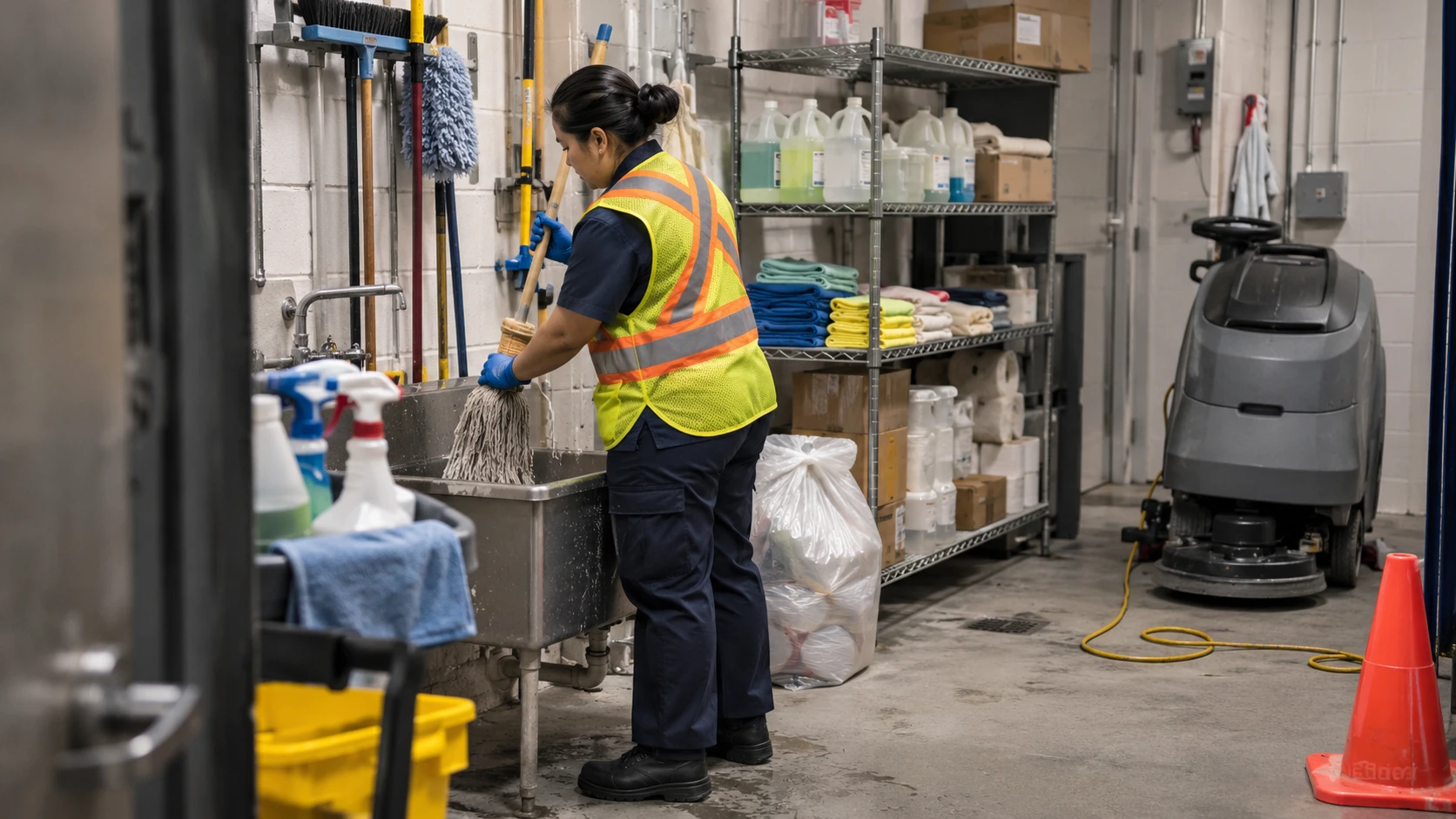
The core commercial cleaning services
1. Janitorial cleaning
Janitorial work is the recurring, routine cleaning that keeps a building running. A crew comes in on set nights and works through the same scope each time: garbage and recycling, washrooms, high-touch points, kitchens, vacuuming and mopping. It's usually billed as a flat monthly price.
Who it suits: any business or building that needs a steady standard week to week, from small offices to multi-tenant buildings. See what's covered in our janitorial services.
2. Office cleaning
Office cleaning is janitorial work shaped around how an office is used. That means reception and lobbies, workstations, boardrooms, kitchens, washrooms and floors, all done after staff leave. A good office scope separates nightly tasks from weekly and monthly ones, so lightly used rooms aren't over-cleaned.
Who it suits: professional offices, head offices, tech and creative studios, and shared workspaces. More on our office cleaning page.
3. Day and night porter services
A porter is a cleaner who stays on site for a shift instead of coming in to clean and leave. A day porter works during business hours: restocking washrooms, handling spills, tidying lobbies, wiping touch points and keeping entrances clear. A night porter covers the evening or overnight hours in buildings that stay busy late.
Who it suits: busy office towers, retail and grocery, medical buildings, and any lobby that's always on show. Porter shifts are usually billed by the hour or by the shift, and can run alongside a nightly program.
4. Floor care
Hard floors need more than nightly mopping to last. Floor care covers stripping old finish, applying new coats of wax or finish, and burnishing to keep the shine between full refinishes. It's usually done once or twice a year, with burnishing in between.
Who it suits: grocery stores, retail, schools, clinics, warehouses and any building with vinyl or other resilient flooring that sees heavy traffic. See our strip and wax service.
5. Post-construction cleaning
New builds and renovations leave behind dust, debris, stickers, paint flecks and residue in every corner. Post-construction work is usually done in stages: a rough clean after the main trades finish, a final clean before inspection, and a touch-up right before handover.
Who it suits: builders, general contractors, developers and tenant-improvement projects. Details on our post-construction cleaning page.
6. Strata cleaning
Strata buildings have their own scope: lobbies, hallways, elevators, stairwells, amenity rooms, garbage and recycling rooms, and parkades. The work is usually set by the strata council or property manager and paid out of the strata's operating budget, so a clear written scope matters. The Condominium Home Owners Association of BC is a useful resource for councils managing contracts like this.
Who it suits: residential and mixed-use strata corporations and the property managers who look after them. More on our strata cleaning page.
7. High dusting and periodic deep cleans
Some tasks don't need doing every night but can't be ignored for long. High dusting covers vents, light fixtures, ledges, pipes and the tops of partitions and cabinets. Other periodic work includes wall washing, interior glass, deep cleaning washrooms and kitchens, and detailing baseboards and doors.
Who it suits: almost everyone, on a monthly or quarterly schedule. These tasks are usually priced as add-ons to a recurring program, which is one reason quotes can look so different. Our guide to what commercial cleaning costs in Vancouver explains how they're usually priced.
Specialized programs
Some spaces need a program built from several of the services above. Grocery is a good example: floors, washrooms, back-of-house areas and entrances all need different attention at different times. That's why we run a dedicated grocery store cleaning program rather than a standard office scope.
How to pick the right mix
Most buildings don't need every service. A simple way to decide:
- Start with the recurring work. Decide how many nights a week the space needs cleaning, based on headcount and traffic.
- Add daytime coverage if people notice mess during the day. If washrooms run out of paper by lunch, a porter shift may cost less than complaints.
- Plan the periodic work. Put high dusting, glass and floor refinishing on a calendar so it doesn't get skipped.
- Book one-off work separately. Post-construction, move-in and pre-inspection cleans are quoted on their own.
What to ask about products and safety
Whatever services you choose, ask what products the crew uses. Every chemical on site should have a safety data sheet and be labelled under BC's WHMIS rules. If your team has scent sensitivities or you want lower-impact products, ask whether the company can use third-party certified cleaners, such as those carrying ECOLOGO certification.
Also ask what isn't included. Every company has things it doesn't do in-house, and some subcontract them. It's better to know up front which tasks are covered by the crew you're hiring and which you'll need to arrange separately.
Getting comparable quotes
Once you know which services you need, ask each company to quote against the same written scope. List the areas, the tasks in each, and how often each task is done: nightly, weekly, monthly or a few times a year. Without that, one quote might include high dusting and floor burnishing while another leaves them out, and the cheaper number isn't really cheaper.
A walkthrough helps here. A company that has walked your space can tell you where the scope is light, where you're paying for more than you need, and which periodic tasks are overdue.
Next step: Not sure which services your space needs? Book a walkthrough and we'll put together a scope that covers the recurring work, the periodic tasks and anything one-off.