

A commercial office cleaning checklist works best when it's organized by area, with every task given a daily, weekly or monthly frequency. That's how professional office cleaning crews build a scope, and it's the quickest way to see what your current cleaner is and isn't doing. Below is the checklist we use as a starting point, area by area.
This list covers what gets done, not how often you need a crew in. If you're still deciding how many nights a week your space needs, start with our guide on how often an office should be cleaned, then match these tasks to that schedule.
How to use this checklist
Treat it as a template, not a contract. A 12-person accounting office and a 150-person tech floor have the same rooms but very different traffic. Walk the space, cross out what doesn't apply, and move tasks up or down a frequency based on how hard each area is used. Daily means every cleaning visit. Weekly and monthly tasks are usually rotated across visits so the crew isn't doing everything on one night.
Entrance and reception
This is the first thing visitors see, and it collects most of the grit that ends up on the rest of your floors.
Daily
- Vacuum entrance mats and clear debris from under them
- Clean glass on entry doors and sidelights
- Dust and wipe the reception desk, counters and visitor seating
- Empty waste and recycling bins
- Sweep and damp mop hard floors
Weekly
- Wipe door frames, kick plates and push bars
- Dust signage, framed art and plant leaves
- Spot clean walls and switch plates
Monthly
- Hand clean baseboards and corners
- Dust vents and high ledges
- Vacuum upholstered seating
Workstations and private offices
Most crews don't move papers or touch monitors and keyboards unless asked. Agree on that up front so nobody is surprised.
Daily
- Empty waste and recycling, replacing liners as needed
- Vacuum open floor areas and walkways
- Wipe clear desk surfaces and spot clean desk fronts
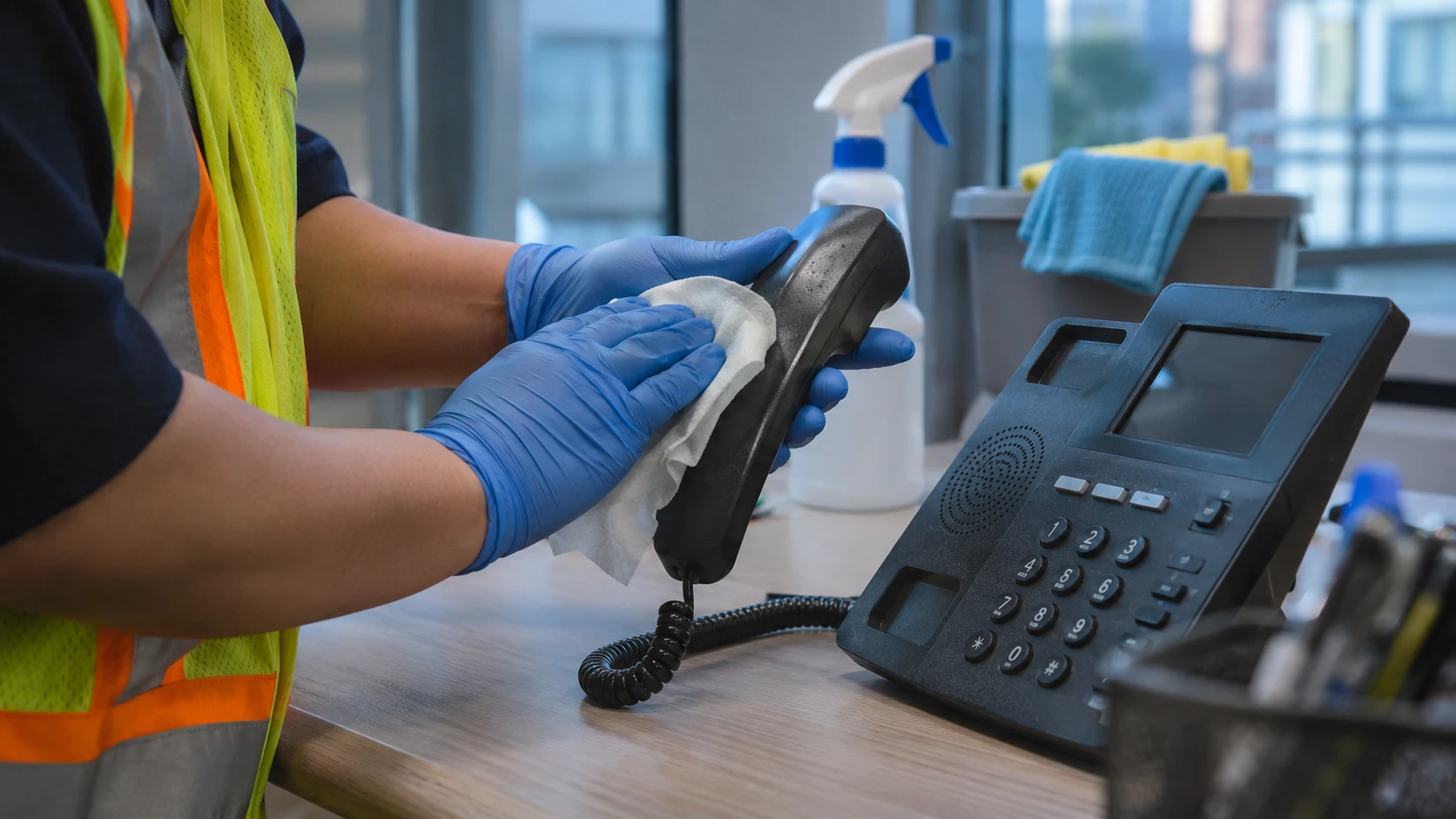
- Wipe shared phones and equipment where your policy allows
Weekly
- Vacuum under desks and along edges
- Dust partitions, filing cabinets and window sills
- Wipe chair arms and bases
Monthly
- Dust blinds
- Detail vacuum fabric chairs and panels
- Clean interior glass partitions fully
Boardrooms and meeting rooms
Daily
- Clear and wipe tables, including coffee rings
- Clean whiteboards only if your team wants them wiped
- Straighten chairs, empty bins and vacuum
Weekly
- Wipe chairs, remotes, conference phones and cable ports
- Clean glass walls and doors
Monthly
- Dust light fixtures, vents and the tops of screens
A boardroom used twice a week doesn't need a full clean every night. A quick check and a trash pull is often enough on quiet days.
Kitchen and breakroom
Kitchens are where complaints start. Food residue, full bins and sticky handles get noticed fast.
Daily
- Clean and disinfect counters, tables and the sink
- Wipe handles on the fridge, microwave, coffee machine and cabinets
- Empty garbage, recycling and food scraps bins and replace liners
- Restock paper towel and hand soap
- Sweep and mop the floor
- Load or run the dishwasher if that's in scope
Weekly
- Clean inside the microwave
- Wipe cabinet doors and the backsplash
- Wash out organics and recycling bins
Monthly
- Clear out the fridge on an agreed day, with notice to staff
- Detail clean small appliances
Food scraps can't go in the garbage anywhere in the region. Metro Vancouver's food scraps disposal ban applies to businesses as well as homes, so make sure the breakroom has a clearly labelled organics bin and that the crew keeps the streams separate.
Washrooms
Washrooms need to be done properly every visit. This is the area that tells staff whether the cleaning is any good.
Daily
- Clean and disinfect toilets, urinals, seats and sinks
- Clean mirrors and polish fixtures
- Disinfect flush handles, taps, door handles, dispensers and stall locks
- Restock toilet paper, paper towel, soap and sanitary supplies
- Empty all bins, including sanitary bins
- Mop and disinfect floors
Weekly
- Wipe partitions, doors and walls around fixtures
- Run water into floor drains so the traps don't dry out
- Descale taps and sinks
Monthly
- Deep clean grout lines and floor edges
- Dust vents and high surfaces
For disinfecting, use products that carry a Drug Identification Number (DIN). You can look any product up in Health Canada's Drug Product Database. Your cleaner should also keep safety data sheets for every chemical on site, as required under WHMIS.
Floors
Daily
- Vacuum traffic lanes and entrances
- Sweep and damp mop hard floors in traffic areas
- Spot clean spills
Weekly
- Full vacuum of all floors, including edges
- Machine scrub or deep mop larger hard-floor areas
Monthly to yearly
- Burnish hard floors on a set schedule
- Plan a scrub and recoat, or a full strip and wax, once or twice a year depending on traffic
Wet floors left without signage are a slip hazard for anyone who comes in early. Cones and enough dry time belong in every floor routine.
High-touch points
These surfaces cross every area, which makes them easy to miss. Give them their own line on the checklist.
- Door handles, push plates and pulls
- Light switches and elevator buttons
- Stair railings
- Printer and copier panels
- Shared keyboards, kiosks and card readers
- Fridge, microwave and coffee machine handles
- Water fountains and bottle fillers
Most offices have these wiped every visit. In cold and flu season, or in a busy shared space, some clients add a midday wipe by a day porter so the surfaces are covered while staff are actually in the building.
What usually sits outside a nightly checklist
Some work is periodic and quoted separately: floor refinishing, high dusting above normal reach, exterior windows and cleanups after a renovation. Ask for these as separate line items so you can see what you're paying for. Our breakdown of what office cleaning services include explains where most contracts draw that line, and our guide to cost per square foot covers how the scope moves the price.
Turning the checklist into a scope
- Walk the space with your cleaner and note how each area is really used
- Set a frequency for each task, then cut anything you don't need
- Agree on what the crew won't touch, such as desks with papers, electronics or server rooms
- Put the final list in writing and keep a copy on site
- Review it after the first month and adjust
A written scope also makes the work easy to check. If you manage several suites, the same checklist can run across the whole building through a janitorial services program, with one standard on every floor. We clean offices across the city, including towers in Downtown Vancouver.
Next step: Book a walkthrough with Bloom Commercial Clean and we'll build a written checklist around your space and schedule.