
To choose a commercial cleaning company in Vancouver, check four things before price: WorkSafeBC coverage, liability insurance, a walkthrough before the quote, and a written scope. Then look at how the work is supervised and how problems get handled. This checklist walks through each one, plus the red flags and the questions worth asking.
Price still matters, but only once you're comparing like with like. Our guide to what commercial cleaning costs in Vancouver explains how quotes are built so you can read them properly.
The checklist
1. WorkSafeBC clearance letter
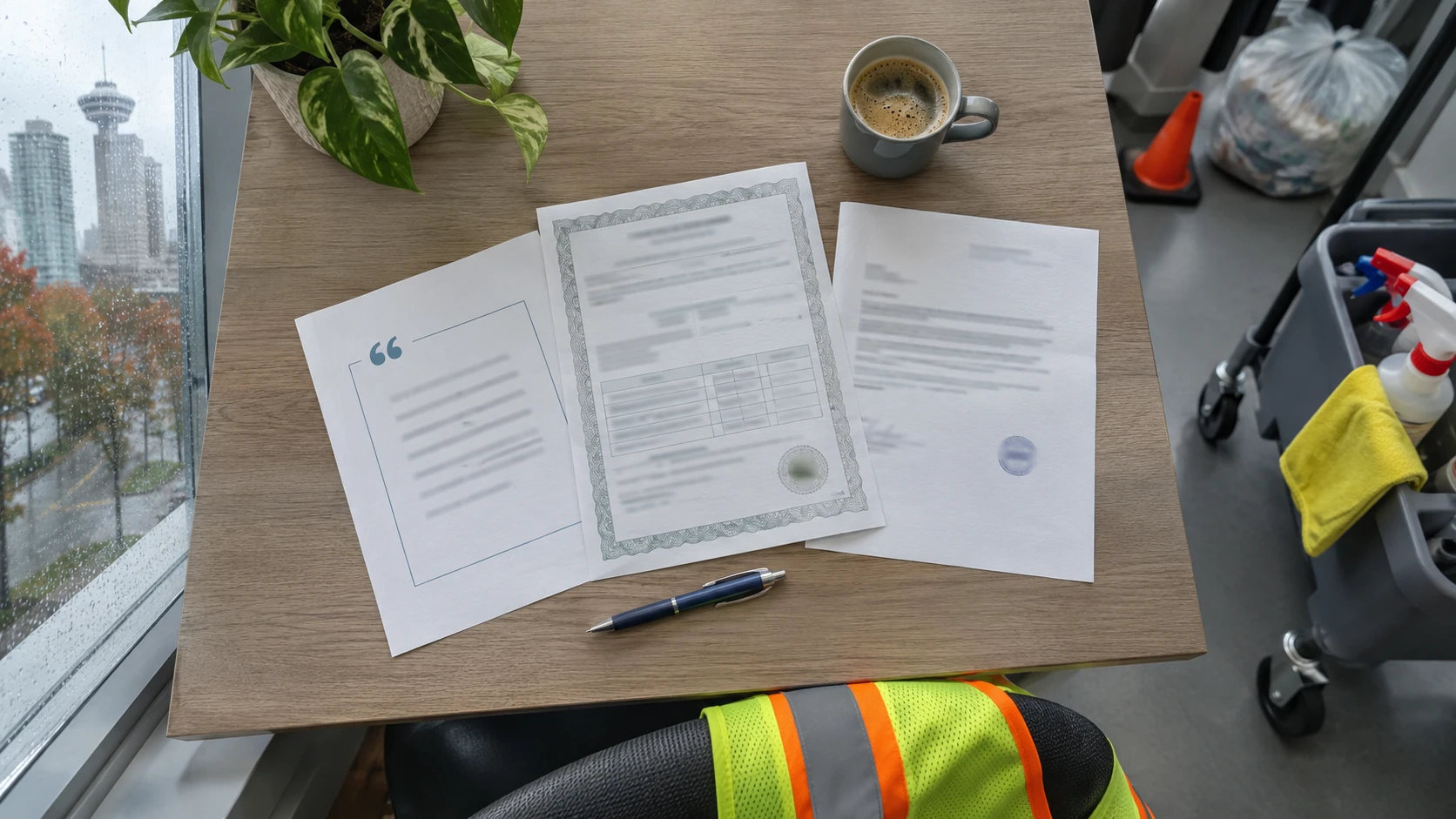
In BC, if you hire a contractor who isn't registered and up to date with WorkSafeBC and one of their workers is hurt on your site, you can be held responsible for unpaid premiums. WorkSafeBC explains this on its page about why you need a clearance letter. You can get a clearance letter online for free. Ask for one before you sign, and check again periodically during the contract.
2. Liability insurance
Ask for a certificate of commercial general liability insurance and check the amount and expiry date. Property managers and strata councils often ask to be named as additional insured on the policy. If anything is damaged or a key goes missing, this is what protects you.
3. A walkthrough before the quote
A company that quotes over the phone without seeing your space is guessing. A proper walkthrough covers every room, how it's used, the floor types, access and security, and anything specific to your building. Quotes given without one tend to change after the first month.
4. A written scope
The scope is the list of areas and tasks, split by frequency: nightly, weekly, monthly and periodic. It's the most important document in the contract. Without it, you have nothing to check the work against. Our list of commercial cleaning services is a useful starting point for working out what should be on it.
5. Supervision and quality checks
Ask who checks the crew's work and how often. Good answers include regular site inspections, a supervisor you can reach, and a routine for following up on missed items. If the answer is "the cleaner just does it," there's no one accountable when standards slip.
6. Communication
Find out who your contact person is, how you report an issue, and how fast someone responds. A simple log or email thread where issues are noted and closed off is worth more than promises.
Also ask how the crew will communicate with your building. Who holds the keys or fobs, who your tenants or staff should talk to if something's wrong, and how notes left for the cleaners get picked up. Small things like a notebook at reception or a shared email inbox stop issues from getting lost between visits.
7. Training and products
Ask how new cleaners are trained and what products they use. Every chemical on site should have a safety data sheet and be handled under BC's WHMIS rules. If your space has specific needs, like a clinic, a grocery store or a strata building, ask about experience with that type of site.
8. Contract terms
Read the term, the notice period and what happens if you're unhappy. Reasonable contracts allow either side to end the agreement with notice. Watch for long lock-ins, automatic renewals without notice, and price increases that aren't tied to scope changes.
9. Fit for your type of building
An office, a strata building and a construction site need different things. A company that does nightly janitorial services well isn't automatically set up for strata cleaning or post-construction cleaning. Ask for examples of similar work. You can see the kind of sites we work on on our key projects page.
Red flags
- No walkthrough. A firm price without seeing the space.
- No written scope. Vague promises like "full clean" with no task list.
- Can't show WorkSafeBC or insurance. Or says they'll send it later and never does.
- Much lower than every other quote. Usually means fewer hours on site, and it shows in the washrooms first.
- Cash only or no invoices. A sign the business isn't set up properly.
- High turnover with no plan. A new face every week and no one training them.
- No local supervision. Nobody nearby who can check the work or step in when a cleaner is sick.
Questions to ask before you sign
- Can you send a current WorkSafeBC clearance letter and certificate of insurance?
- How many hours on site is your quote based on, and how many cleaners?
- Who supervises the crew, and how often are inspections done?
- What happens if a cleaner is sick or a task is missed?
- Which tasks are nightly, which are periodic, and which are extra?
- Are supplies included, and what products do you use?
- How do you handle keys, fobs and alarm codes?
- What's the notice period if we want to change the scope or end the contract?
- Can you share references from clients with a similar space?
Comparing quotes fairly
Give every company the same scope and ask them to price against it. Then compare the hours behind each price, not just the total. Two quotes for the same monthly amount can mean very different time on site. If one company points out something the others missed, like floors that need refinishing or a washroom that needs daytime attention, that's usually a sign they actually looked.
It also helps to check the company is close enough to support your building. Our service areas page lists where our crews work across Metro Vancouver.
Finally, start with a clear first month. Agree on how the first few weeks will be checked, walk the space together after the first couple of visits, and adjust the scope where needed. A good company will welcome that, because it's how small problems get caught early. You can read more about how we work on our about us page.
Next step: Book a walkthrough with Bloom Commercial Clean. Ask us for our WorkSafeBC clearance letter and insurance certificate, and we'll leave you with a written scope for your space.