

Janitorial cleaning is the routine, recurring upkeep that keeps a building usable day to day: bins, washrooms, kitchens, floors and touch points. Commercial cleaning is the broader term, and it also covers the deeper, periodic and one-off work that a nightly crew doesn't do every visit. Most buildings need both, and our commercial janitorial services are built to sit alongside the periodic work.
The two terms get used interchangeably, which is part of the confusion when you're reading quotes. If you want the full definition of the wider category, see our guide on what commercial cleaning is. Here we focus on where the line usually sits and why it matters for your budget.
What janitorial cleaning means
Janitorial work is maintenance. It happens on a fixed schedule, often every business night, and its job is to stop dirt and waste from building up. The same tasks are repeated on every visit, with a few weekly and monthly items rotated in.
A typical janitorial scope includes:
- Emptying garbage, recycling and organics, and taking them to the building's bins
- Cleaning, disinfecting and restocking washrooms
- Wiping kitchen counters, sinks and appliance handles
- Vacuuming and mopping floors in traffic areas
- Wiping door handles, light switches, railings and elevator buttons
- Spot cleaning glass at entrances
Janitorial crews usually work after hours. When a building needs someone on site during the day to restock washrooms, handle spills and keep the lobby tidy, that's a day porter, which is still janitorial work, just on a different shift.
What commercial cleaning covers beyond that
Commercial cleaning includes janitorial work, plus the jobs that happen less often, need specialized equipment, or are tied to a specific event. Our list of commercial cleaning services covers the full range, but the common ones are:
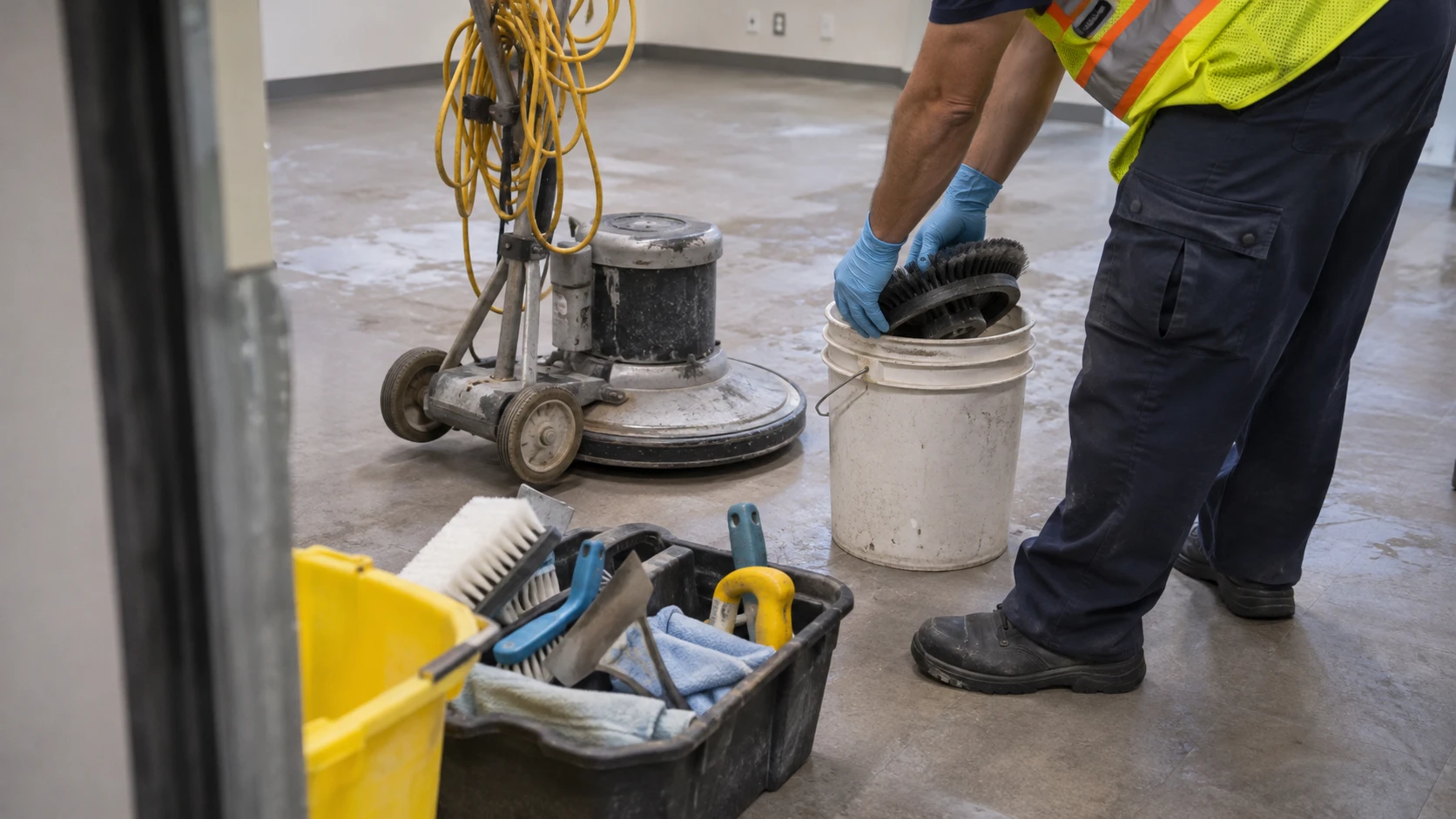
- Floor restoration. Machine scrubbing, burnishing, and periodic strip and wax on vinyl and other finished hard floors.
- High and detail work. High dusting, vents, light fixtures, blinds and full interior glass.
- Post-construction cleaning. Removing drywall dust, debris, stickers and residue after a build or renovation, before handover or move-in. See our post-construction cleaning service.
- Move-in and move-out cleans. A top-to-bottom clean when a tenant leaves or arrives.
- Event or seasonal cleans. A deep reset after a busy season, an inspection, or an office reconfiguration.
Examples from real building types
Office
Janitorial: nightly bins, washrooms, kitchen and vacuuming. Commercial: twice-yearly floor refinishing in the lobby and kitchen, quarterly high dusting, and a one-off deep clean after a renovation.
Strata building
Janitorial: regular lobby, elevator, hallway and garbage room cleaning. Commercial: parkade sweeping, periodic floor care and a deep clean before an AGM or after a common-area upgrade. Strata cleaning programs usually mix the two on a set calendar.
Grocery or retail
Janitorial: daily floor care, washrooms, staff rooms and spill response. Commercial: overnight machine scrubbing and regular refinishing to keep high-traffic floors safe and presentable. Our grocery store cleaning program shows how those pieces fit together.
Janitorial vs commercial cleaning at a glance
- Frequency. Janitorial is recurring, often nightly. Commercial cleaning also includes periodic and one-off work.
- Purpose. Janitorial keeps a building clean. The periodic side restores or resets it.
- Scope. Janitorial covers the same core tasks every visit. Periodic work covers detail, height, floors and special projects.
- Equipment. Janitorial uses vacuums, mops and carts. Periodic work often needs floor machines, lifts and specialty products.
- Pricing. Janitorial is usually a flat monthly contract. Periodic work is quoted per job or per square foot.
- Who it's for. Janitorial suits any occupied building. Periodic work is scheduled around your calendar, tenant turnover or construction.
How most buildings combine them
The most cost-effective setup is a janitorial contract for the recurring work, with a planned calendar for the periodic jobs. For example, floors refinished every spring and fall, high dusting each quarter, and a deep clean booked ahead of known events. Planning periodic work keeps it from turning into an emergency, and it stops you paying for a heavy restoration that regular care would have avoided.
Using one company for both also helps. The nightly crew sees the building every day, so they can flag a floor that's wearing through or a washroom that needs more attention before it becomes a complaint. If you're using two separate contractors, make sure each scope says clearly who does what, so tasks don't fall between them or get billed twice.
Signs your nightly cleaning isn't enough
A good janitorial crew can keep a building tidy for a long time, but some problems are a sign that periodic work is overdue rather than that the crew is falling short:
- Floors look dull right after mopping. The finish has worn through, and mopping can't bring it back. The floor needs a scrub and recoat or a full refinish.
- Dust keeps coming back on desks. It's often falling from vents, light fixtures and ledges that nobody has cleaned in months.
- Grout and corners stay dark. Edges and grout lines collect residue that nightly mopping pushes around but doesn't lift.
- Glass looks streaky in the afternoon sun. Spot cleaning at the entrance isn't the same as a full interior glass clean.
- Odours in washrooms or garbage rooms. Drains, bin areas and floor edges may need a deeper clean on a set schedule.
If you're seeing these, the fix is usually to add the right periodic task to the calendar, not to change the nightly scope.
What to check before you sign
- A written scope split into nightly, weekly, monthly and periodic tasks
- Which periodic jobs are included in the monthly price and which are quoted separately
- Proof of liability insurance and a WorkSafeBC clearance letter
- The disinfectants being used. Products with a Drug Identification Number can be checked in Health Canada's Drug Product Database
- How missed tasks and complaints are reported and fixed
If you're weighing up providers, a commercial cleaning company in Vancouver that handles both sides can give you one point of contact and one standard. For a closer look at the nightly side on its own, read our guide to what a nightly janitorial program covers.
Next step: Talk to Bloom Commercial Clean about a nightly janitorial program with a planned calendar for floors, high dusting and deep cleans.